
(Menu)
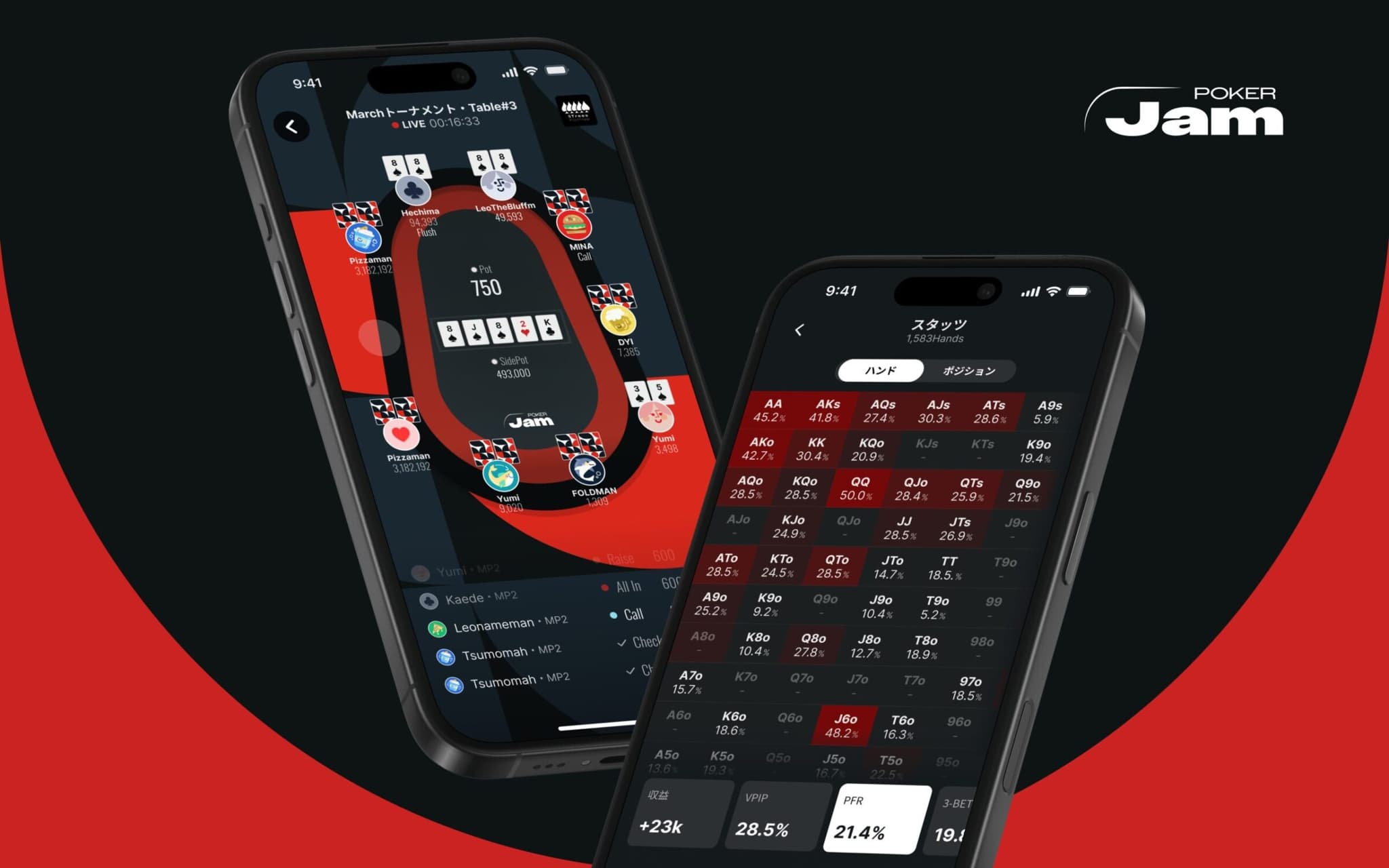
In recent years, the number of poker playersーmost notably for Texas Hold’emーis on a steady incline, along with the number of poker venues. At the same time, more people are enjoying poker through online apps. As a result, operators of poker venues are now required more than ever to deliver a unique value of in-person poker experiences.
POKER Jam was launched in response to this current context, aiming to amplify the uniqueness of in-person poker experience and transform it into a compelling in-venue experience.
One of the greatest appeals of in-person poker lies in playing face-to-face with real people.
The tension, subtle expressions, and breathing of opponents are elements that cannot be replicated online.
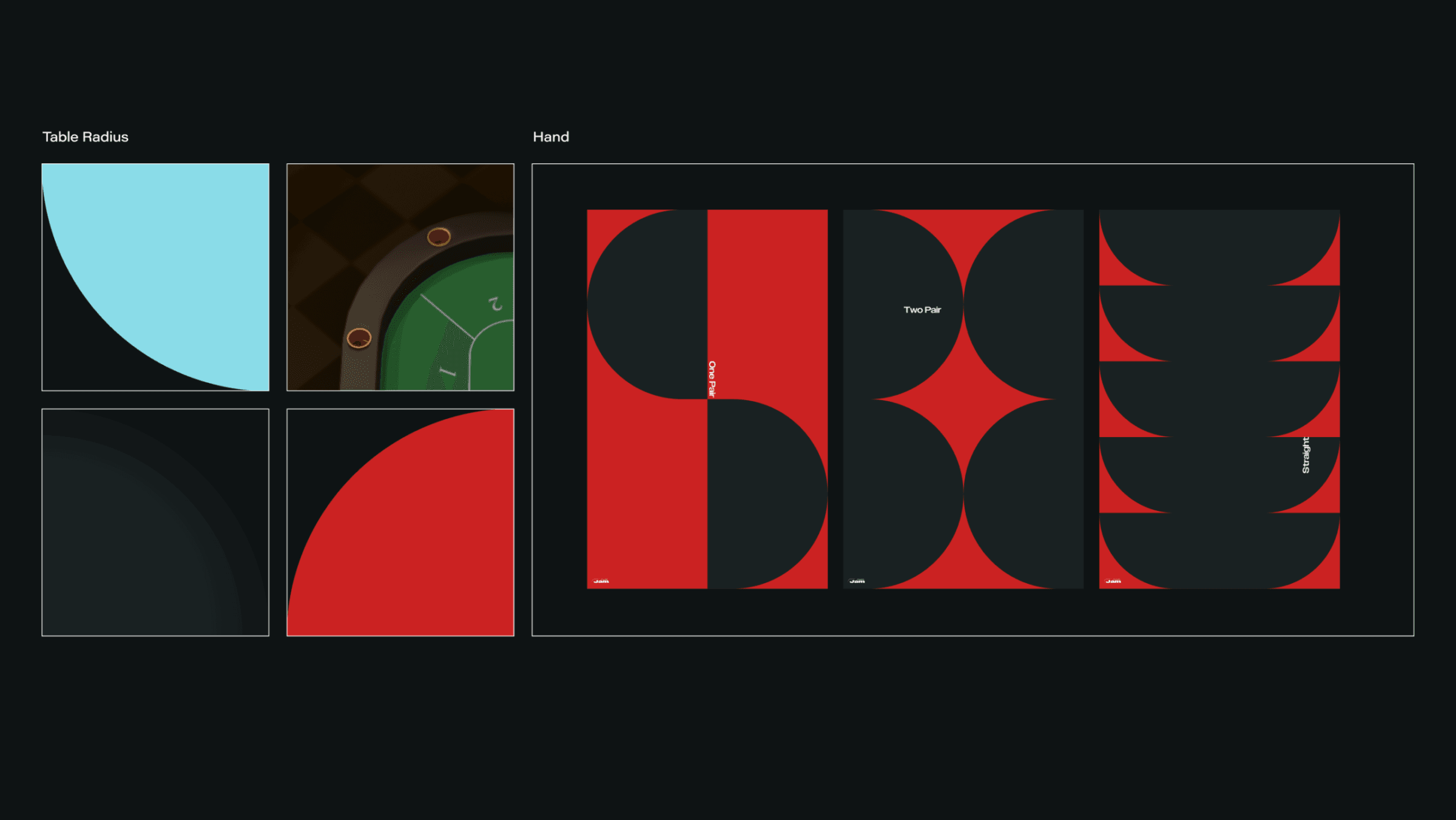
The visual identity used throughout the service was designed to reflect these qualities unique to in-person poker experience.
Like a jazz session, where players’ intentions and excitement intertwine, the concept of “Jam” is expressed through dynamic patterns inspired by a poker table, where the action takes place—capturing the clarity and rapid shifts of gameplay triggered by revealed cards.
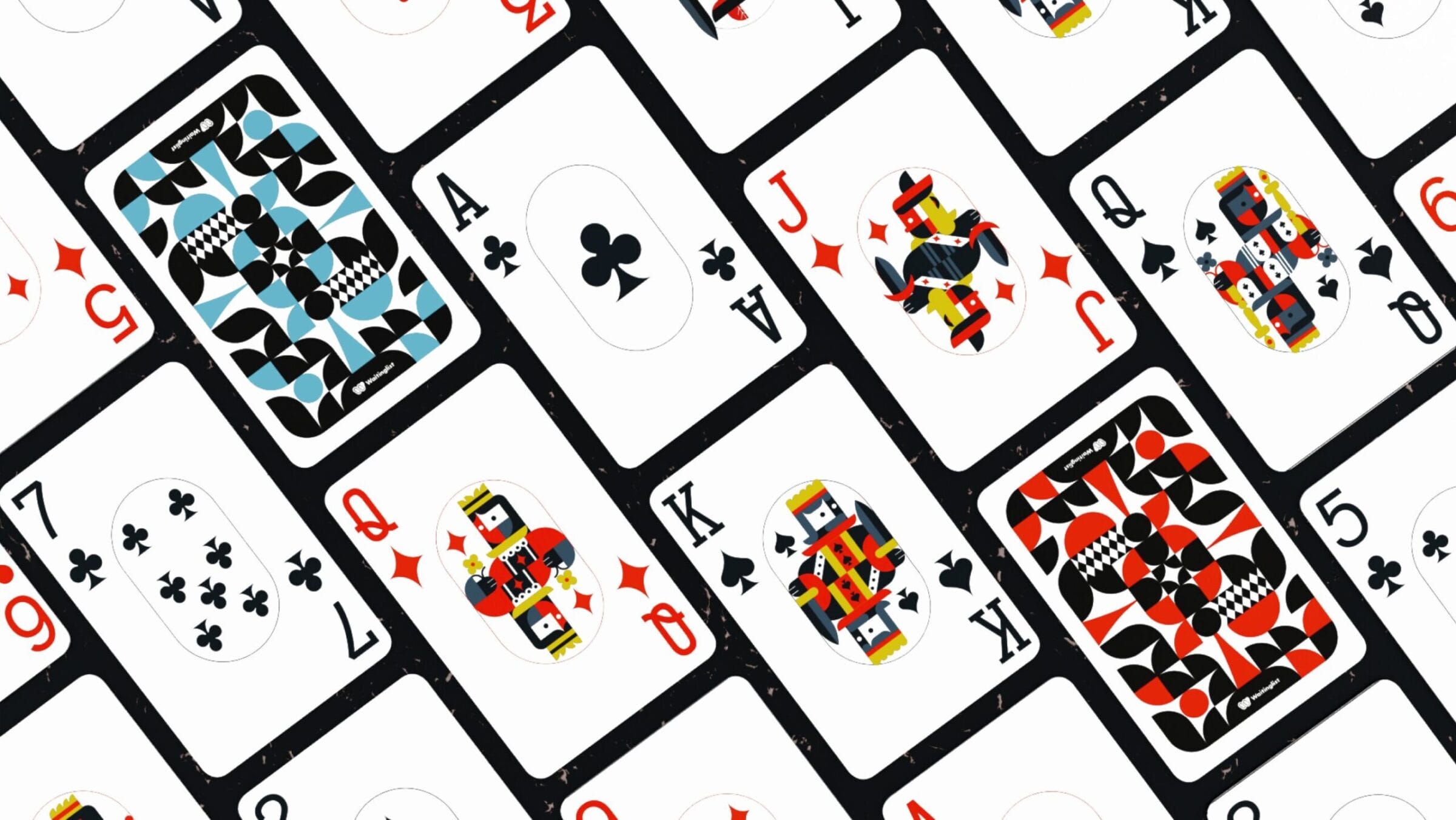
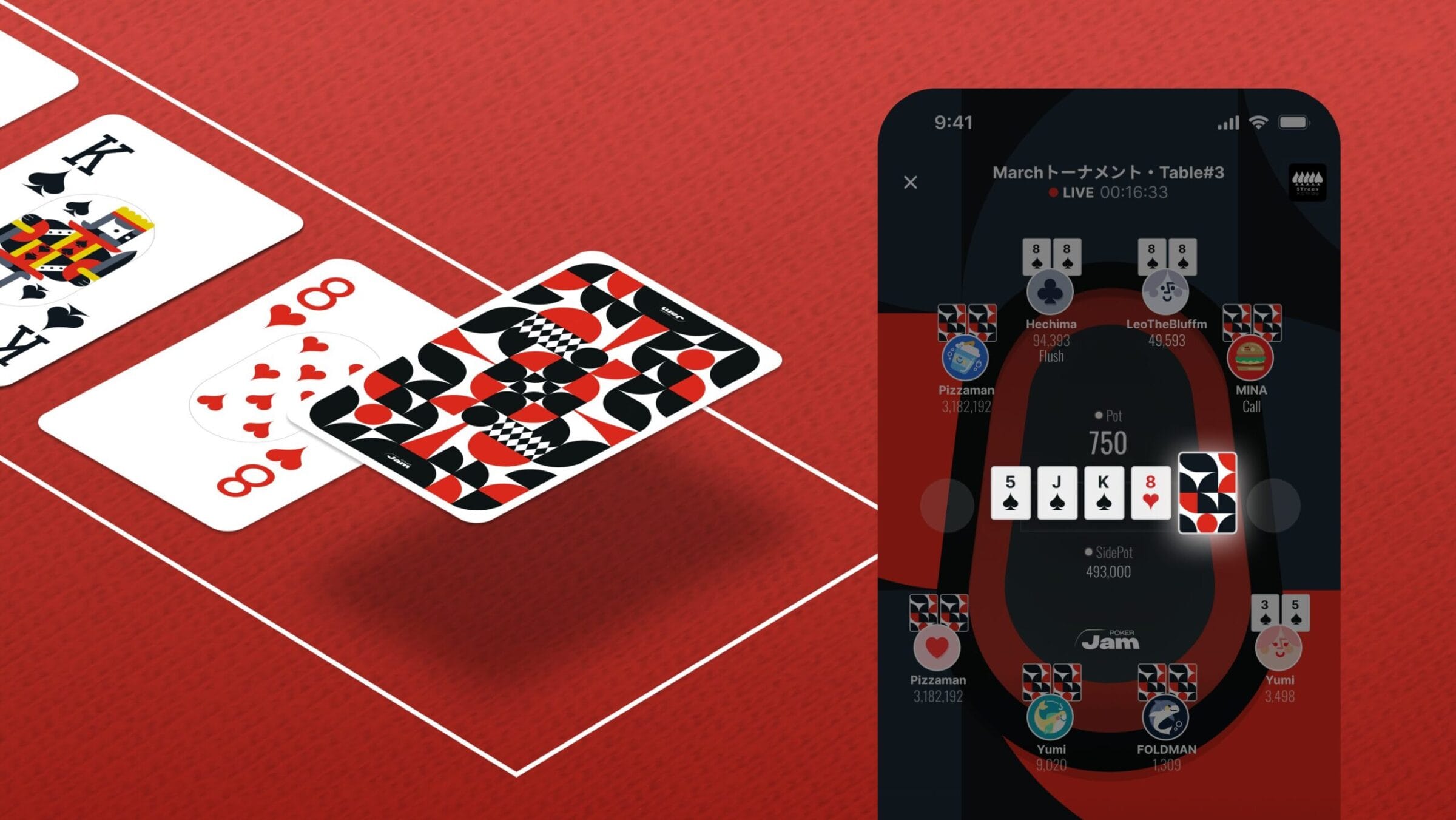
In addition, we designed a set of original deck of cards with RFID chip installed to enable the experience.
The app is synced to RFID-enabled poker tables, allowing users to automatically capture all gameplay data and view it in real time on a mobile screen. These data is utilized for post-game analysis of user statistics. We explored how to present this data effectively to enhance the overall poker experience that ultimately leads to customer retention. Together with engineers and experienced poker players, we developed a structure that makes users want to revisit the venues equipped with POKER Jam.
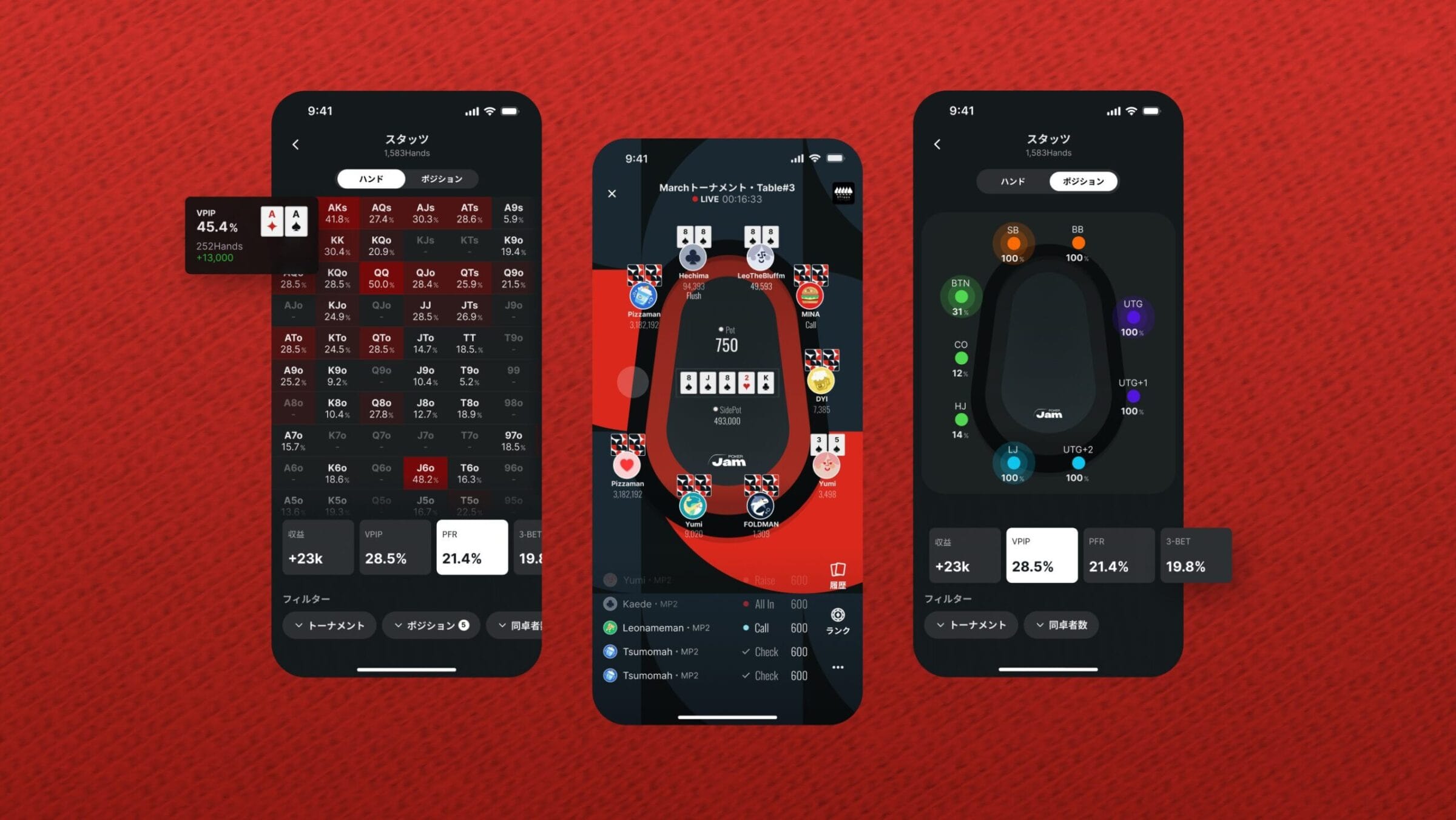
Across the application, we focused on presenting the large volume of RFID-collected data in a way that is intuitive and actionable.
For hands-based statistics, we followed the conventional chart framework while reducing color complexity to make comparisons easier.
We also added an access to the latest game results, ensuring the experience goes beyond static analysis.
For position-based statistics, we directly mapped the real poker table layout into the UI, allowing players to instantly understand tendencies based on seating position.
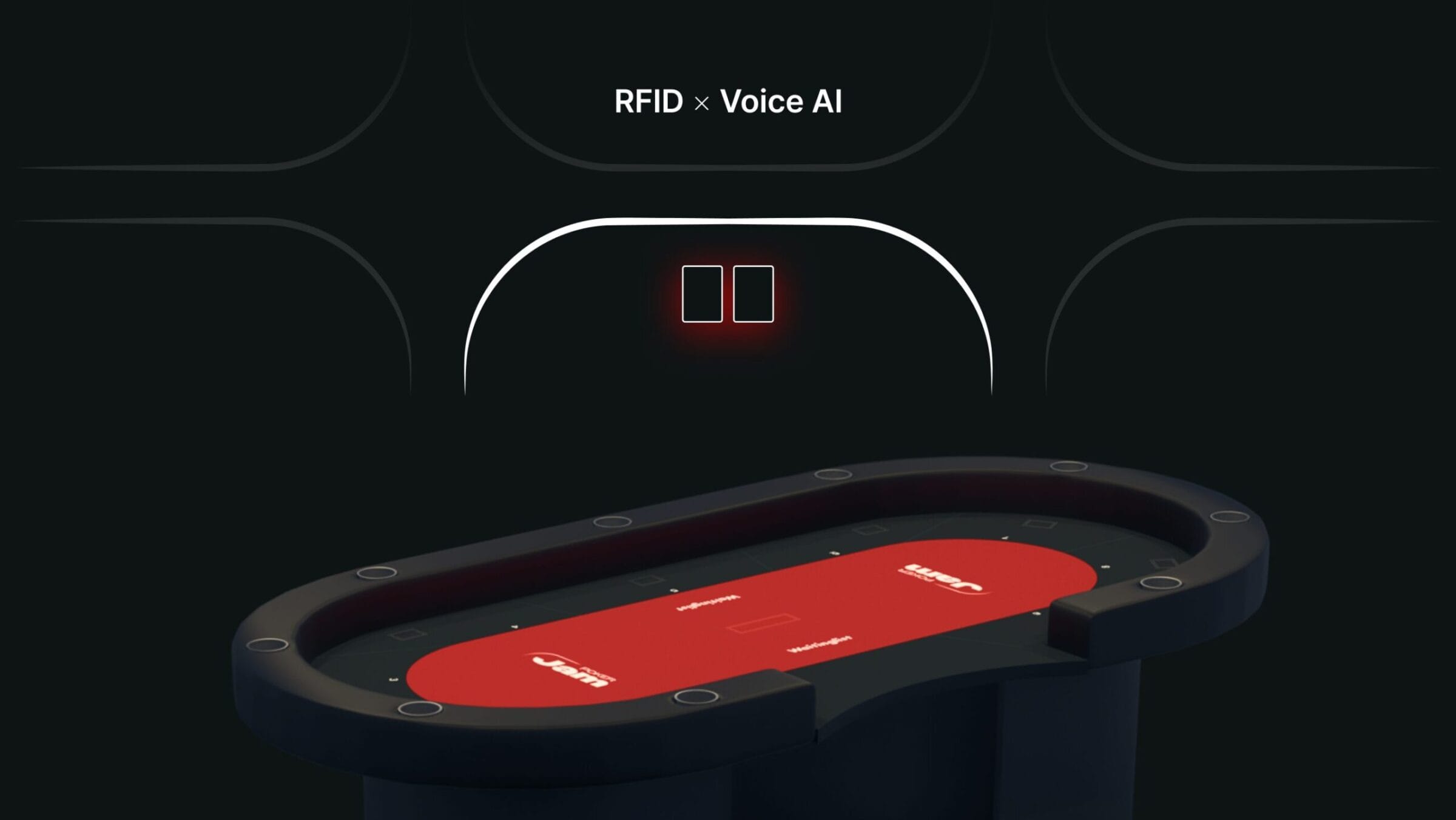
Furthermore, POKER Jam has established a system to easily create game streams and replay videos directly in-store and on mobile by leveraging RFID and dealer voice AI data. To reflect real-time cards, actions, and pot status into the UI, we designed and implemented animations using Rive, ensuring that complex game progression is represented seamlessly.
One of the biggest challenges in development was accurately representing the complex flow of poker gameplay without any breaks in logic. Poker involves numerous conditional branches, including action types, chip states, number of players, side pot generation, and progression through flop, turn, and river stages. Additionally, inconsistencies in RFID reading timing and edge cases had to be accounted for.
To visualize all this information in real time, we structured and abstracted the data into a system compatible with Rive’s State Machine and Data Binding. As a result, we established a robust animation system capable of accurately and clearly representing complex poker gameplay, suitable for both live streaming and archived content.
To reflect RFID data in real time—including cards, actions, and pot states—we designed and implemented motion using Rive.
Faced with limited engineering bandwidth, state logic was managed directly within Rive, significantly reducing the frontend implementation cost. This went beyond mere visual design; it was a strategic architectural choice to bake data-driven logic into the animations, ensuring the system remains scalable and easy to maintain as it evolves.
To facilitate smooth Rive implementation, we established not only animations but also shared design and operational guidelines within the team. Through close collaboration with engineers, we defined naming conventions and design principles to ensure clarity in the roles of ViewModels and State Machines. This prevented ambiguity between Rive and application responsibilities, making both implementation and review processes more efficient.
We also aimed to make Rive a team-wide capability rather than an individual skill.
When onboarding designers who are new to Rive, we shared foundational knowledge and design approaches, and conducted reviews for all implementations—evaluating not only visual quality but also structural soundness from an implementation perspective. Feedback was provided with considerations for scalability and maintainability, proactively addressing potential engineering hurdles during the design phase.
Through this process, we established Rive as a sustainable and collaborative tool within the team.